
 Image 1 of 2
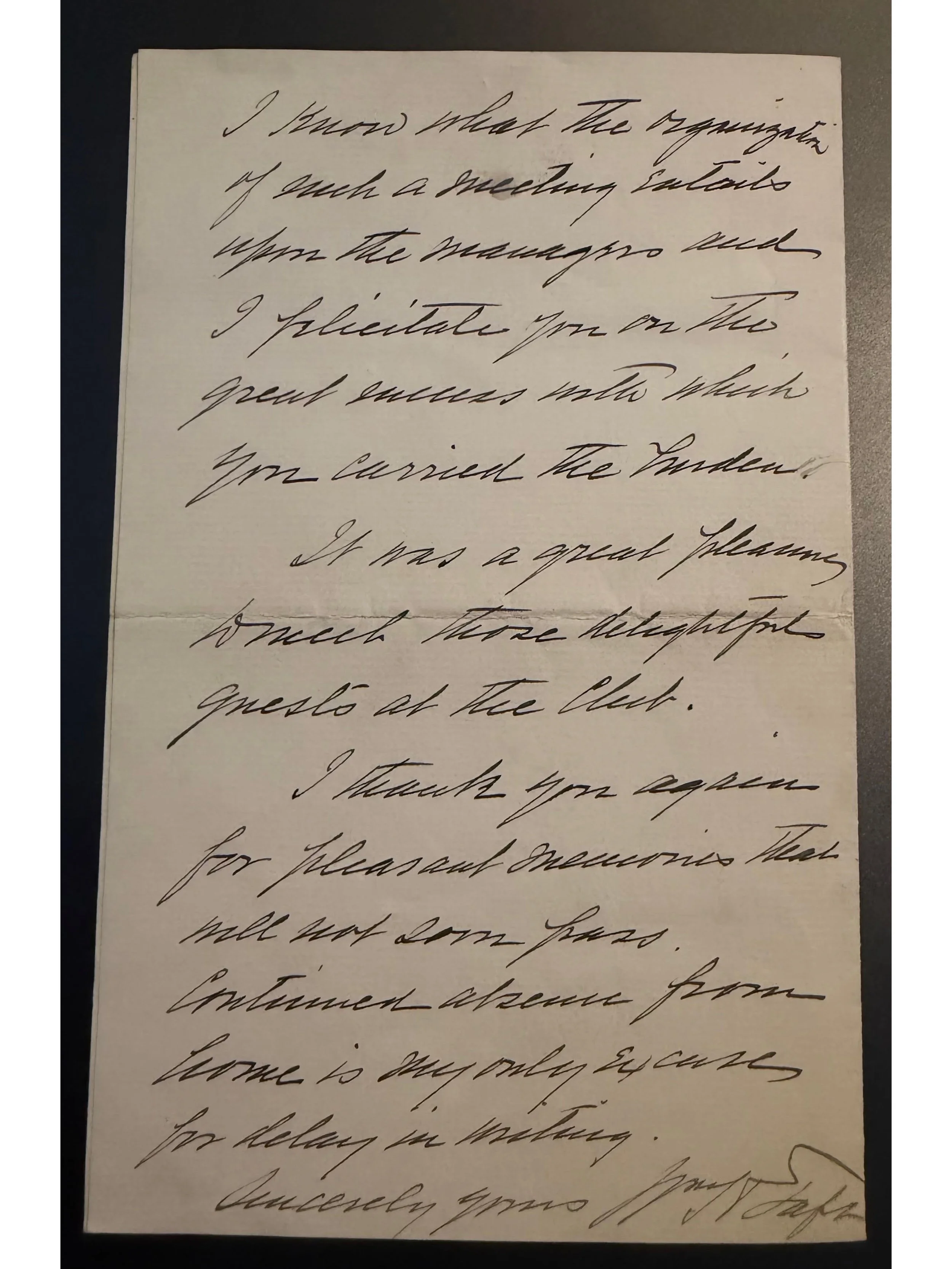 Image 2 of 2
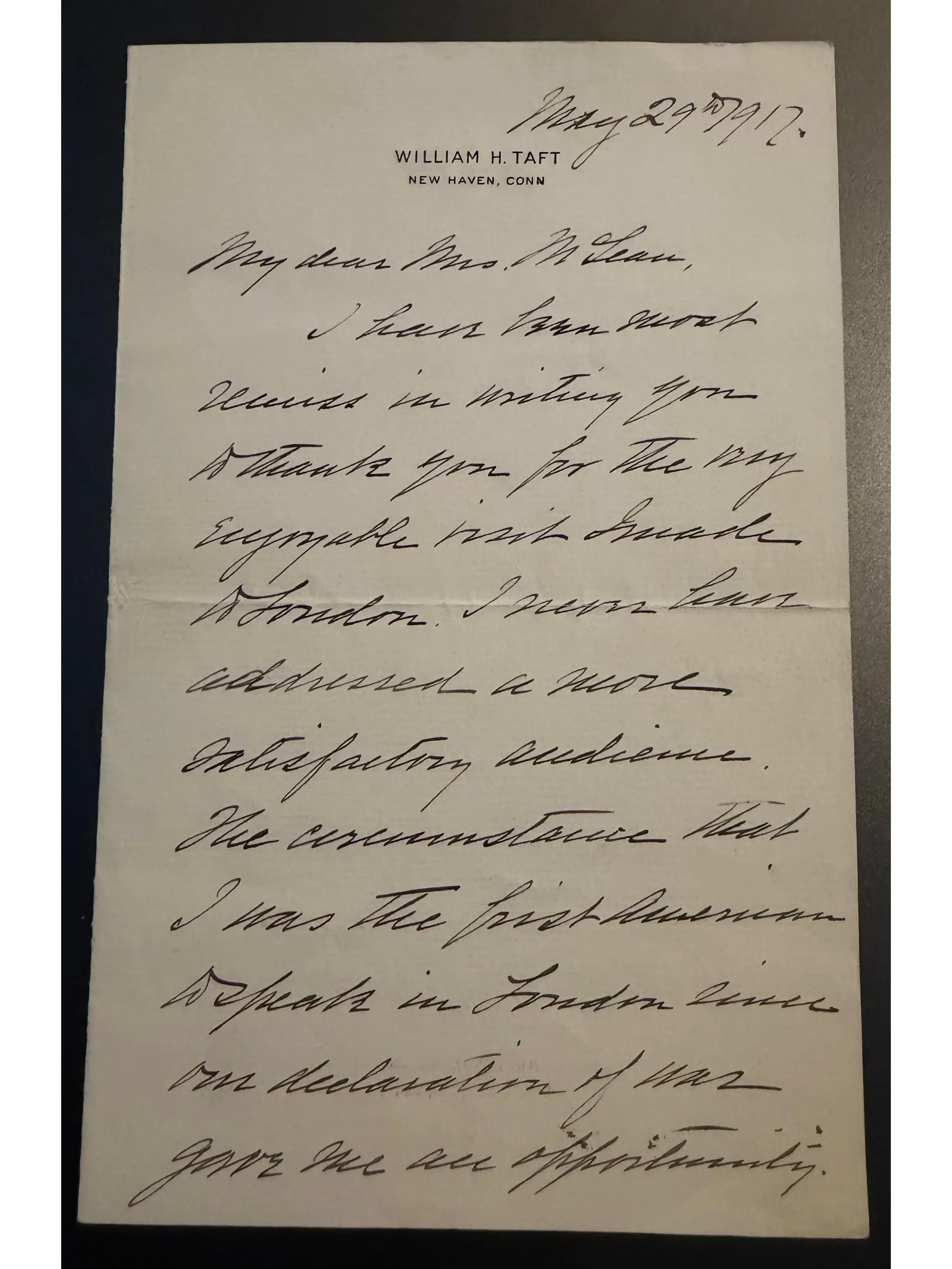
27th President. Two-page autograph letter signed “Wm. H. Taft'“, May 29, 1917, written on first and fourth pages of a four-leaf personal stationery from New Haven, Connecticut, to a recipient in London, Ontario, in full:
I have been most remiss in writing you to thank you for the very enjoyable visit I made to London. I never have addressed a more satisfactory audience.
The circumstances that I was the first American to speak in London since our declaration of war gave me an opportunity.
I know that the organization of such a meeting entails upon the [?] and I felicitate you on the great success with which you carried the burden.
It was a great pleasure to meet those delightful guests at the club.
I thank you again for the pleasant memories that will not soon pass.
Continued absence from home is my only excuse for delay in writing.
Accompanied by original envelope with address handwritten by Taft.
President Woodrow Wilson asked Congress for a declaration of war on April 2, 1917. The Senate approved it on April 4, and the House of Representatives voted in favor on April 6.