
 Image 1 of 2
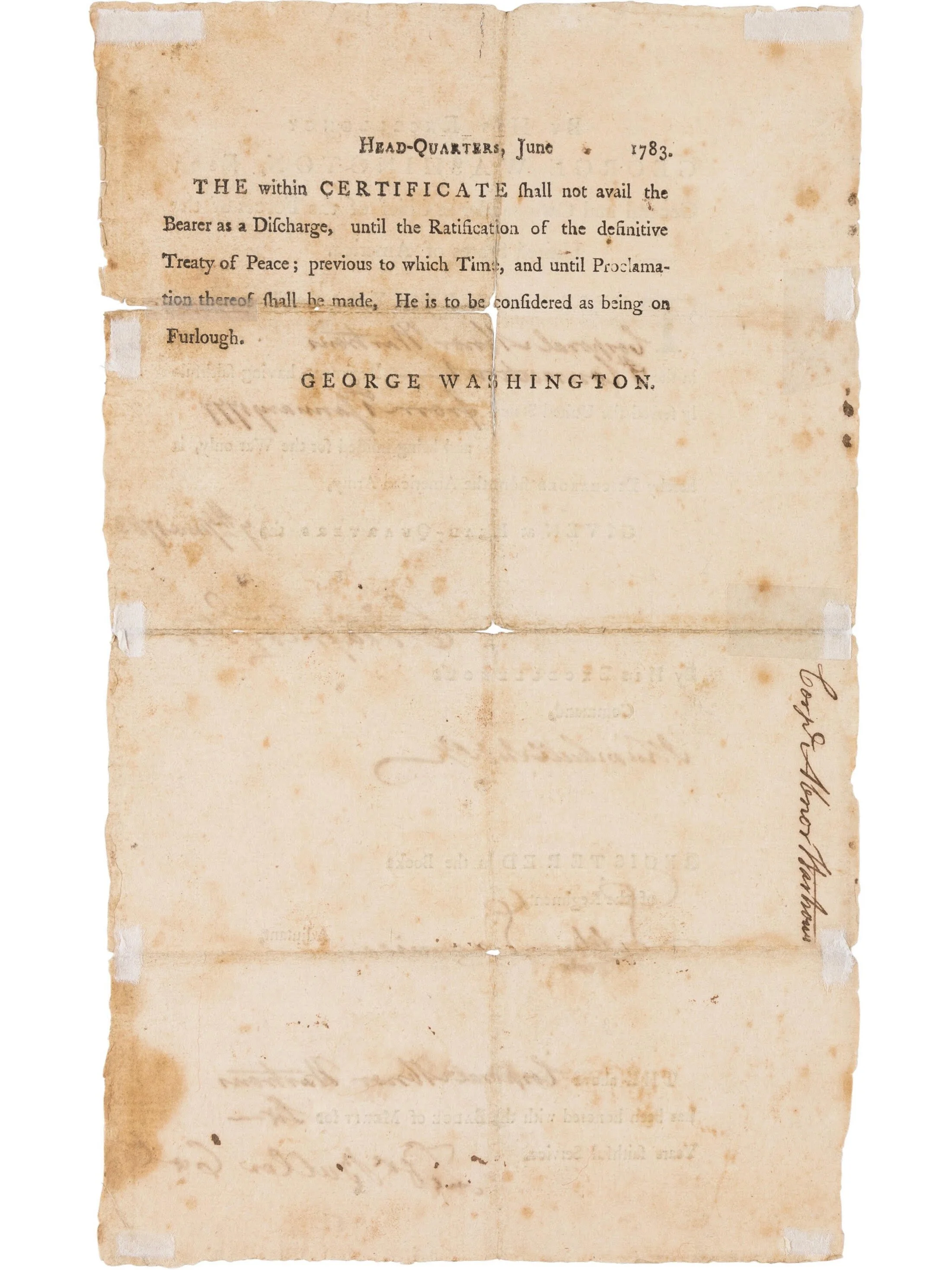 Image 2 of 2
1st President.
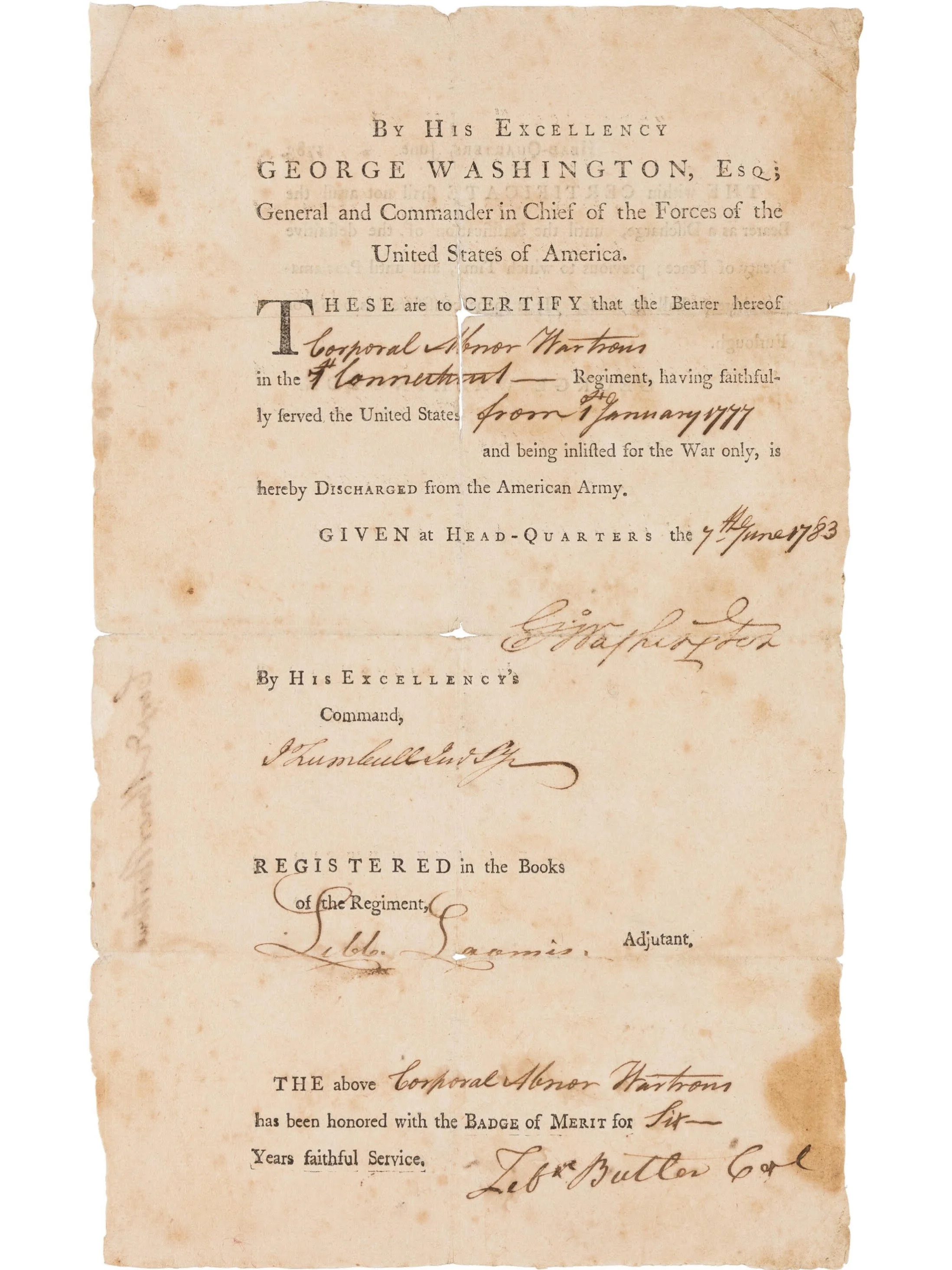
Revolutionary War–dated partly-printed document signed “Go: Washington” one page both sides, 8.25x13.75, June 7, 1783. Continental Army military discharge headed “By His Excellency George Washington, Esq., General and Commander in Chief of the Forces of the United States of America.” In part: “These are to certify that the Bearer hereof Corporal Abner Wartrom in the 7th Connecticut Regiment, having faithfully served the United States from 1st January 1777, and being inlisted for the War only, is hereby Discharged from the American Army.”
Prominently signed at the conclusion by General George Washington as Commander in Chief of the Continental Army and countersigned by Jonathan Trumbull, Jr., L. M. Loomis, and Zebulon Butler.
The lower portion of the document recognizes Wartrom's six years of service with the "Badge of Merit," and is endorsed by Butler. On the reverse is a statement noting that the certificate "shall not avail the Bearer as a Discharge, until the Ratification of the definitive Treaty of Peace," and that he is to be considered on furlough until that time
Wartrom had served in the Continental Army since January 1777 and was among the veterans recognized for extended service at the close of the Revolution. Zebulon Butler, under whom he served, endorses the certificate and records Wartrom's receipt of the Badge of Merit for six years of "faithful Service." By June 1783, with peace effectively secured, Washington began furloughing much of the Continental Army from its encampment at Newburgh. These certificates documented each soldier's service while making clear that the men technically remained on furlough until formal ratification of the peace.
Dating to the end of the Revolutionary War and featuring a bold signature of the nation's first commander-in-chief, this is an immensely desirable discharge for one of America’s earliest fighers.
Wear and staining commensurate with age and handling; several separations along the fold lines, including one passing through Washington's signature. Tape repairs on the verso. The document remains visually strong and highly legible.